Friday, January 25, 2013

"There is no alternative" is not an argument.

While he was talking about austerity as a failed economic and fiscal policy, the former head of the Canadian public service, Alex Himelfarb, could have as easily been talking about the undead failure which is the Anglican Covenant when he said:
When our leaders tell us that there is no alternative, it is a safe bet to assume that there is indeed an alternative and one that we would prefer were it on offer.

There is an alternative to the failed policy of austerity. Prudent fiscal spending on things like infrastructure replacement and improvement will "prime the pump," while responsible tax policy (ie, not "lower taxes uber alles") would both ensure adequate revenue while also ensuring the wealthiest pay their air share of the costs of a civilized society.

Similarly, there is an alternative to the failed Anglican Covenant. A commitment from all sides to stay at the table as a family even when we disagree - especially when we disagree - is how we should be functioning as faithful Christians who honour our Lord's desire "that they all may be one."

But there is one other point which Himelfarb makes about austerity which also applies to the Anglican Covenant.
What became increasingly clear was that austreity had never been driven by fiscal policy or economics or evidence. It was driven by ideology. Market fundamentalism. A desire to make government much smaller, eliminate or reduce, as much as politics allowed, so-called entitlements, create a “pro-business” climate of less regulation, less government, and, above all, lower taxes.
In the same way, the Anglican Covenant was never about creating structures to hold the Anglican Communion together in the face of disagreement.  It was always about centralizing authority in the Communion, to replace a family of Churches with one international and quasi-curial (if not quasi-papal) structure controlled from the centre.

In both cases, the proponents of radical change tried to stampede a consensus by claiming, "There is no alternative."  Of course, what they really meant was, "We don't want you to look at the alternative because we know the alternative is better for you and for your interests and it doesn't satisfy our desire for control."

"There is no alternative" is not an argument.  And it is virtually always a lie.


Monday, January 21, 2013

Time for the new broom to sweep clean

A recurring image used by populist politicians in opposition, "a new broom sweeps clean," perhaps also describes the opportunity presented to the new Archbishop of Canterbury, the Most Rev'd Justin Welby.  While Dr. Welby is unlikely to make any loud pronouncement against his predecessor's misguided project, he does have an opportunity, very quietly, to sweep the discredited Anglican Covenant into the dustbin of church history.


I was a little startled to realize that I had not made a single blogpost about the so-called Anglican Covenant since July, when I blogged daily from the Episcopal Church General Convention in Indianapolis.  In part, the extended silence was due to the lack of substantive developments. 

Indeed, having seen the Covenant go down in flames in England, Scotland and New Zealand, it is now pretty obvious that the thing is dead.  Yet because it was so incompetently drafted, it staggers on like some dessicated zombie or reflection-free nosferatu.  And in the background, its bewildered partisans try to pretend that everything is coming along swimingly.

A good example of how the ecclesiastical talking heads continue to delude themselves is the report prepared for the fall session of the Church of England General Synod which, while admitting that the draft Act of Synod had been defeated in the dioceses, tries to spin it out of the grave with a bit of fancy arithmetic and a spurious claim of moral victory. 

Of course the business committee completely ignores the unethical way in which the deck was stacked in favour of the Covenanters.  The fact that Church House refused to provide any material that was not 100 percent supportive of the Covenant is not mentioned.  Nor is there any mention of the refusal of many dioceses to permit such information to be distributed to synod members when other groups offered to cover the cost of distribution.  The fact that the debate in many diocesan synods was grotesquely manipulated to produce a pro-Covenant outcome is likewise blithely ignored.  Elsewhere I have used the analogy of a soccer match between Manchester United and the boys from the local grammar school.  If the grammar school wins the game, ManU can take no solace in having kept the score close.

Similarly, the fall meeting of the Anglican Consultative Council carried on in the best "nothing-to-see-here" manner.  The official report from the Anglican Communion Office attempted to spin the English result as a non-defeat, and unofficial commentary attempted to do the same regarding the unequivocal rejection by the Anglican Church in Aotearoa, New Zealand and Polynesia.

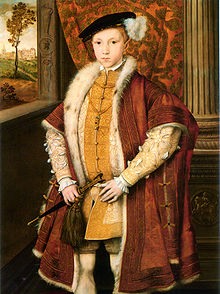
It's all beginning to resemble the apocryphal tale of the Duke of Northumberland holding the dead body of Edward VI in the window so the crowd would believe the young king still lived.


It seems unlikely that Justin Welby will want to waste his ecclesiopolitical capital trying to revive a discredited and discreditable project which, whatever the intentions of its authors, has failed in its purpose.


Wednesday, January 9, 2013

The Sad Plight of the Religious Progressive

One of the frequent frustrations of being a progressive person of faith is having to read and listen to the false and malicious narratives of the religious right claiming that they and they alone represent the official religious viewpoint.

A less frequent frustration - though perhaps even a greater one - is having to read and listen to secular progressives who are so ignorant of the history of progressive political movements that they unconsciously parrot the false memes of the religious right.


Last month, Saskatchewan New Democratic Party leadership candidate Ryan Meili laid out a plan for reaching out to faith communities, and in particular to progressive people of faith.  His plan explicitly offers a counternarrative to the false claims of the religious right, pointing to global examples like Martin Luther KIng and Mahatma Ghandi and to more local examples like former CCF-NDP leaders and Saskatchewan premiers Tommy Douglas and Lorne Calvert.

The key point in Meili's plan is the establishment of a Faith and Social Justice Commission, modeled on a similar initiative in the federal NDP.  This commission would "open a space for dialogue within the party on the intersection of faith and politics," leading to the implementation of an outreach strategy to religious voters.

Meili's proposal is endorsed by former Premier Calvert:

"faith has inspired many of us to seek justice through political action.  To provide an opportunity of dialogue for those who arrive from the intersection of faith and politics will serve the party and the province well."

It is also endorsed by Dr. Mateen Raazi, a leader in Saskatoon's interfaith group Multifaith Saskatoon:

“While duly recognizing and respecting the diversity of religious opinion, this policy emphasizes the commonality of communal and social justice themes across various religious traditions. Adoption of such a policy further provides political common ground to the many whose social justice work is inspired by their religious traditions."

Unfortunately, political blogger Scott Stelmaschuk seems to miss the point, offering up a bit of secular fearmongering and the veiled hint that any outreach to religious progressives would mean compromising the party's principles.

"I fear I've editorialized this post more than I meant to, but I do think there are valid concerns to have over such a commission as this. There is nothing wrong with having a discussion, and attempting to do better to connect our values with those of faith-based groups throughout Saskatchewan; but at the same time, we must take heed to ensure that we are not crafting party policy that compromises on our own social values."

Like many secular progressives these days, Scott is woefully ignorant about the strong tradition of progressive religious political activism in western Canada and in Saskatchewan in particular, and he apears to be oblivious to the significant role religious progressives played in creating the CCF-NDP.  He assumes that people of faith who support the New Democratic Party do so despite their religious beliefs rather than because of them.  And he assumes that virtually all religious voters are anti-choice, even if some set that aside to vote for pro-choice politicians.

Scott seems to be completely unaware of the Social Gospel movement of the late 19th and early 20th centuries, many of whose members were deeply involved in the formation of progressive political movements, especially the Co-operative Commonwealth Federation (the forerunner to today's New Democratic Party.  He appears to have forgotten that for nearly one-third of the party's history in Saskatchewan, it was led by ordained Christian clergymen (Tommy Douglas 1942 - 1961 and Lorne Calvert 2001 - 2009).  (If we include the first Saskatchewan CCF leader, Anglican Lay Reader M.J. Coldwell who successively led the Independent Labour Party 1926 - 1929, the Farmer Labour Party 1929 - 1932 and the Saskatchewan CCF 1932 - 1934, we're well over the one-third mark.)

Somehow, according to Stelmaschuk, getting too cozy with religious people risks undermining the party's principles.  We are led to the ridiculous conclusion that those religious activists (mostly Christian activists, given the demographics of the day - though Jewish progressives played a significant role in other parts of Canada) had nothing to do with shaping the existing principles of the party.

Stelmaschuk also seems completely hoodwinked by the religious right's claim that there is only one authentic religious view on the abortion issue.  He appears to be unaware that the anti-choice consensus on the evangelical right is a recent development - indeed, it isn't as old as the McDonald's Happy Meal.  He seems similarly unaware that religious views on the abortion issue run the gamut from ardently anti-choice to as ardently pro-choice.

I grant you, many of the loudest religious voices these days tend to be pretty reactionary.  That's pretty discouraging for those of us who see ourselves as part of the long tradition of progressive people of faith.

The problem with the kind of superficial, knee-jerk reaction of people like Stelmachuk is that it plays right into the strategies of the religious right.  It alienates potential political allies, leaving us, at best, disenfranchised.  It isn't like the Saskatchewan NDP is so flush with electoral support we can discard religious progressives as an inconvenient constituency.

Indeed, Stelmachuk's shoddy analysis may be the best evidence of the need for a deliberate outreach to religious communities, and for the establishment of a Faith and Social Justice Commission within the Saskatchewan NDP.

Tuesday, December 25, 2012

Searching for the Christ Child


The traditional Simple Massing Priest Christmas story - as told each year since 2007.

The title isn't quite so allegorical as you think. We actually spent about ten minutes before the Christmas Eve service desperately seeking the Baby Jesus for the main creche at the parish where I serve as interim priest.  
It is actually a very interesting creche, set up inside the altar itself. A simple wooden chevron suggests the stable, while the remaining figures stand on black satin.  
It was already in place on Sunday last. Actually in the Sunday before last as we compromised the calendar in the interest of the children's pageant. But Sunday last the creche had only its minimalist roof, one ox and one ass. Mary and Joseph were not far away - standing on the altar pavement - but they hadn't arrived yet. The shepherds weren't there yet either, out tending their sheep on the edge of the pulpit. And the magi were in the middle of the aisle at the back of the church, still some ways away.  
Tonight, Mary and Joseph, and after some panicked moments, the Baby Jesus, were all installed in their places. The shepherds were "summoned to his stable" during the gradual hymn. And the magi were now half way up the aisle - accompanied by a helpful "Mind the Camels" sign prepared by my good wife.  
It was a good celebration in a community which seems increasingly hopeful and future oriented. And generally united. There is no parish on earth that doesn't have some divisions and tensions. But this little parish seem quite determined to be a family together.  
We found Jesus tonight at St. James - literally, allegorically and eucharistically. We all came to the same table, together. That is where we belong in worship - at the same table, together.

Sunday, December 16, 2012

A Voice is Heard in Ramah

When I was in Indianapolis this summer, I had the privilege of meeting Ian Douglas, the Bishop of Connecticut.  I have been thinking of Bishop Ian a great deal over the past 36 hours as he, his suffragans, his clergy and his diocese respond to the act of terror which occured yesterday.

Ian has been posting regular updates, including the most recent I've seen, here.

He mentions the messages of support and the assurances of prayer that he has received from around the world.

The Diocese of Connecticut has been blessed by sisters and brothers in Christ across The Episcopal Church and from around the Anglican Communion who are holding us all in their hearts and prayers. We have heard from colleagues in almost every province of The Episcopal Church and from around the Anglican Communion. We are being remembered in prayer and in specific worship services in churches as far away as: Australia, Canada, Congo, Dubai, England, Guyana, Myanmar, New Zealand, Scotland, South Africa, and others. Never before have we felt the importance and efficacy of our common bonds in the Anglican Communion than we do now in this time of need and in the prayers received.

Bishop Ian's diocese is the oldest Anglican bishopric outside the British Isles.  In 1784, the Bishop of Aberdeen and two other Scottish bishops consecrated Bishop Ian's predecessor, Samuel Seabury, establishing an enduring link between the Episcopal Church in Scotland and the Episcopal Church in the United States.  Today, there is a formal Companion Diocese relationship between the Diocese of Connecticut and the Diocese of Aberdeen and Orkney.  The following prayer was written by the present Bishop of Aberdeen and Orkney, Robert Gillies, in response to the events of yesterday.

Sustaining and redeeming God, 
In sadness and in the tragedy of awful loss, we offer before you those young lives lost as a consequence of human violence this past week. 
We raise in the distress of this time the families of whose children are no longer to share life and joy with them. 
We mourn those other families also fractured by the needless killings of that day. 
As Jesus first came to his people and lives of the young and innocent were lost in the cruelty of one individual upon others, so now 2000 years on we stand alongside those whose similar grief is beyond our imagining. 
Holy and loving God bring all consolation that can be brought to those most in need of your presence today, and never cease to make your presence real in this their hour of need.
To you we voice this prayer, Amen.

Bishop Robert's prayer makes reference to the now often forgotten story of the Holy Innocents as related in Matthew 2: 16 - 18.  Herod, terrified at the prospect of a new King in Israel, orders an act of mass murder and state terrorism.  This aria relates to the the scriptural account:
A voice is heard in Ramah ... Rachel, weeping for her children.  She refuses to be comforted because they are no more.
The selection does not speak of hope, for the hope which Jesus brings is not yet known.  We pray that the Rachels of Newtown may know a greater and more immediate comfort.


Friday, December 14, 2012

Suffer the little children . . .

Today, as usual, I picked up my grandson and his mother to give him a ride to preschool.  Unusually, I also ended up picking him up at lunch time and delivering him back to his mother.  I was at the school for only a few moments, and shared only a few words with the teacher who was supervising their play time.

Yet somehow, that brief encounter made the horrific news from Newport, Connecticut feel as though it was even closer to home.

A school, likely not all that different from the school Oliver attends.  Teachers every bit as dedicated to their charges as Oliver's teachers.  Children not much older than Oliver.

Like every parent, every grandparent, every person who has ever cared for a child, my heart is torn in grief for those children, for those teachers, for those families.

The insanity of a political culture that wails in grief while effectively condoning an epidemic of mass murder is simply to much to bear.  Already, the NRA and their fellow travellers are playing their propaganda games.  One longs for the day when the endorsement of the NRA will be as politically toxic as the endorsement of the KKK.

In the mean time, at least 20 children are dead, brutally slain.  Dedicated teachers have died with their charges.  An entire community has been rent asunder.  A generation of young children have had their innocence destroyed.  And all of this with the enthusiastic support of the far right fringe and the effective collaboration of a fearful majority.

Lord have mercy.


O God, whose beloved Son took children into his arms and blessed them, give us grace to entrust these innocents to your never-failing care and love, and bring us all to your heavenly kingdom; through Jesus Christ our Lord, who lives and reigns with you and the Holy Spirit, one God, now and for ever. Amen.


Most merciful God, whose wisdom is beyond our understanding, deal graciously with the people of Newtown in their grief. Surround them with your love, that they may not be overwhelmed by their loss, but have confidence in your goodness and strength to meet the days to come; through Jesus Christ our Lord. Amen.


 The picture is Trinity Church, Newtown, Connecticut, immediately prior to a prayer service earlier this evening.

Friday, December 7, 2012

Conformed to the Image of Christ the Good Shepherd

In less than 12 hours, our diocesan synod will begin voting to select the XIIth Bishop of Qu'Appelle. You can read about the process, including the diocesan profile and the profiles of the candidates here.


Although I've had ample time for it to sink in, I still find myself somewhat surprised to be one of those candidates.  Until six months ago, I had presumed that past blotting of my copybook would preclude me ever being a candidate.

It has been very strange to be a part of this process.  From time to time I found myself imagining what I might do about certain things were I to be elected.  It was not a helpful place for me to dwell.  But difficult in a different way was planning future activities in the parish, aware that I might not be the priest to see those things through.

A friend sent me an email yesterday with some excellent advice should I become bishop.  The thing is, it is equally good advice should I not become bishop and remain a simple massing priest.  I share it here as he has written it to me, with certain identifying bits and pieces appropriately redacted.
Hi Malcolm,
I think you would be a good bishop. God has certainly refined you in the fire over the years. May I ask you to do one thing if you are chosen? Love your people, Malcolm. Love your people and love your clergy. Shepherd them. Do not drive them before you like cattle. In a sense whatever you do as a bishop is irrelevant. (In my humble opinion.) It’s who you are as a bishop that is essential. And whether you’re bishop, pastor or housepainter, you already are who you are, created and called by God, formed by the Holy Spirit, refined in the Spirit’s fire, conformed to the Image of Christ the Good Shepherd. 
Please don’t think I have it in for all episcopoi or even for the archbishop that has been given to me. The man who ordained me,                          ,was a saint. What shone through his shy demeanor was immense love and humility. Whether he was “conservative” or “liberal” ultimately didn’t matter. He cared for us. He loved us. That kind of love cannot be faked. He literally breathed it with every fiber of his being.                           , too, before him, loved us.              was “liberal”,              was “conservative”. Ultimately, none of that matters. I could give a rat’s ass in what “direction” my diocese goes or what “great plans” anyone has for it. Maybe I once believed that was important, but I don’t anymore. Malcolm, love your people with all your heart, be their shepherd, be a father to them. Shepherd and father may sound archaic but, dammit, that’s what we need!  
Glory to God whose power, working in us, can do infinitely more than we can ask or imagine: Glory to him from generation to generation in the Church, and in Christ Jesus for ever and ever. Amen.
God bless!

Good advice for anyone who has the cure of souls.
 
By the end of tomorrow, someone will be the Bishop-elect of Qu'Appelle.  I ask your prayers for whoever it may be.